1. መግቢያ
This manual provides a comprehensive guide to Multiple Imputation (MI), a statistical method for analyzing data sets with missing values. It clarifies the issues associated with incomplete data and outlines the rationale, models, and algorithms of MI.
1.1 Purpose of This Manual
The primary purpose of this manual is to offer a practical understanding of Multiple Imputation and its application in various research contexts. It addresses the challenges posed by partially observed data and presents MI as an effective solution.
1.2 የgetላማ ታዳሚዎች
This guide is intended for quantitative researchers and students in the medical and social sciences who encounter incomplete data in their studies. A foundational understanding of statistical concepts is beneficial for optimal comprehension.
2. Understanding Multiple Imputation
Multiple Imputation is a statistical technique designed to handle missing data by creating multiple plausible completed datasets. Each dataset is then analyzed using standard statistical methods, and the results are combined to produce overall estimates and standard errors.
2.1 Rationale and Principles
The rationale behind MI is to account for the uncertainty associated with missing data by generating several imputed datasets rather than a single one. This approach provides more accurate standard errors and valid inferences compared to single imputation methods.
2.2 Addressing Missing Data
The manual discusses the assumptions underlying analyses of partially observed data and how MI addresses these. It covers the relationship between various imputation models and their associated algorithms.
3. Practical Application of Multiple Imputation
This section provides guidance on the practical use of MI, drawing from real-world examples in medical and social statistics.
3.1 Key Considerations
When applying MI, researchers should consider the nature of the missing data, the choice of imputation model, and the number of imputations required. The manual offers insights into these critical decisions.
3.2 Real-World Exampሌስ
The text includes detailed discussions and examples to illustrate the application of MI in both observational studies and randomized trials.
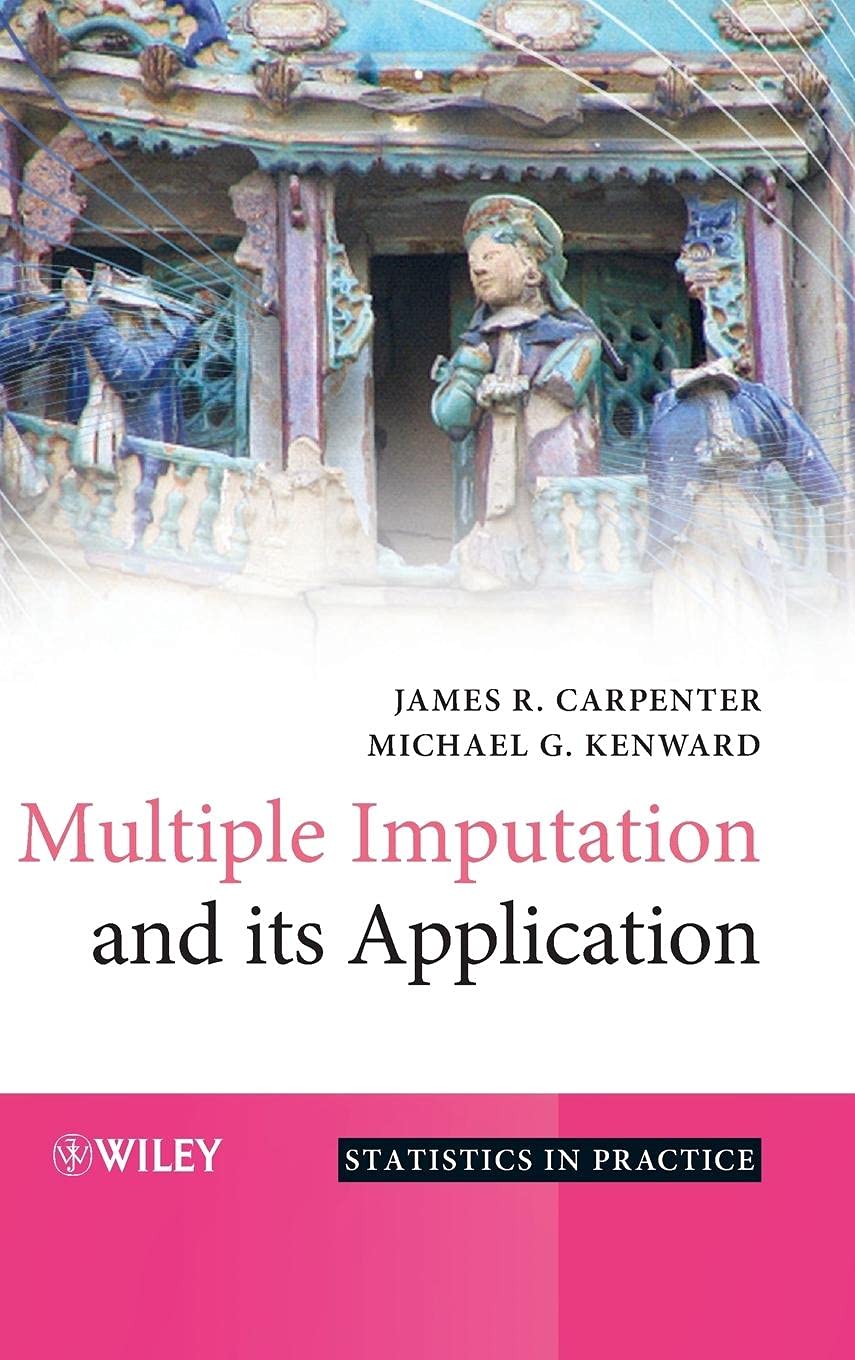
Figure 1: Front cover of 'Multiple Imputation and its Application' by James Carpenter and Michael Kenward. The cover features an ornate, multi-colored architectural structure with figures, set against a white background with the book title and authors' names.
3.3 የተወሰኑ የመተግበሪያ ቦታዎች
- Handling non-linear relationships and interactions with multiple imputation.
- Survival analysis using multiple imputation.
- Multilevel multiple imputation techniques.
- Sensitivity analysis via multiple imputation.
- Using non-response weights with multiple imputation.
- Doubly robust multiple imputation methods.
4. Software and Resources
The book is supported by supplementary online resources to aid in practical implementation.
4.1 Supplementary Webጣቢያ
A supplementary website is available, providing datasets used in the examples and illustrative code. This resource supports various statistical software packages.
4.2 የሶፍትዌር ውህደት
የ website features code for freely available REALCOM impute software, as well as examples for SAS, Stata, MLwiN, and R, facilitating the application of MI methods.
5. About the Authors
5.1 James Carpenter
James Carpenter is affiliated with the Medical Statistics Unit at the London School of Hygiene and Tropical Medicine, UK. He is an expert in statistical methods, particularly in the area of missing data.
5.2 Michael Kenward
Michael G. Kenward is also from the Medical Statistics Unit, London School of Hygiene and Tropical Medicine, UK. He has extensive experience in pre-clinical and clinical medicine, epidemiology, and statistical consulting, and is the author of 'Analysis of Repeated Measurements'. Both authors have contributed significantly to the development and training in multiple imputation for multilevel data.
6. የምርት ዝርዝሮች
| አታሚ | ዊሊ |
| የታተመበት ቀን | የካቲት 18 ቀን 2013 ዓ.ም |
| እትም | 1ኛ |
| ቋንቋ | እንግሊዝኛ |
| የህትመት ርዝመት | 368 ገፆች |
| ISBN-10 | 0470740523 |
| ISBN-13 | 978-0470740521 |
| የእቃው ክብደት | 1.3 ፓውንድ |
| መጠኖች | 6.3 x 0.85 x 9.3 ኢንች |
| ተከታታይ | Statistics in Practice |
7. ተጨማሪ መርጃዎች
For further information, datasets, and illustrative code, please visit the official supplementary webጣቢያ፡


